
 English
 Russian
 Nederlands
 Deutsch
 Español
 Français
 Türkçe


Travelling through Japan - roads, airports, railway, bus transportation
 Japan has a highly developed transport infrastructure. Here, there is a high-quality road network, railway junction, and air transportation service. Popular public transport in Japan is buses, and the fare here is much lower than on trains. As a rule, you pay for the ride in the bus itself when boarding. In cities such as Nagasaki and Kumamoto tram tracks have been laid, so you can use this mode of transport. In the largest cities of Japan, there are underground as well as a surface metros. In the capital city, with the help of this type of transport you can reach any area, including the suburbs. Tickets are sold at the vending machines.
The actual state language of Japan is Japanese. The locals call it nihonga. It is worth noting that more than 142 million people speak Japanese …
Read further
Read further
 A specific mode of transport in Japan is a monorail, which is designed for intracity travel. The trains are fully automated and operate without drivers. Such trains operate in the largest cities of the country, including Tokyo. Tickets for them must be purchased separately from that of the railway trains. The length of roads is more than 1,000,000 kilometers, while those with a hard surface in the country are about 810,000 kilometers. The express road is about 6,000 kilometers. It is possible to use the service of a taxi or rent a car. Air transportation has become the most popular means of transportation in Japan. The main center is Haneda Airport. Due to the territorial location of Japan, sea transport is also popular. Tourists can use ferries, ships, liners and catamarans.
Main airports and avia transportation
This is a magnificent country, a travel to which will leave many unforgettable memories. While describing numerous excursions and entertainment, …
Read further
Read further
 Kansai Airport is located on an island that was artificially built. It cannot boast of spacious terminals, however, its design has repeatedly withstood various natural challenges, including earthquakes and typhoons. Chubu Airport is located near Tokoname. On its territory, there is a chic 4-storey shopping center where you can relax in local bars, hold a conference in business halls, relax in VIP rooms, as well as rent a car or familiarize yourself with the offers of travel agencies. From the airport, the city can be reached using a high-speed train or bus.
Railway, bus, water and other transport
 Tourists in Japan will have absolutely no problems with movement around the city. The most popular form of public transport in the country is trains. The railway network reaches absolutely all regions of the country. The cost of ticket depends on the specific class of train, the direction, as well as on the time of day. It is worth mentioning such mode of transport as JR electric trains. They run every 5-10 minutes within a particular city or district. When you purchase a train ticket, it is necessary to keep it with you until the end of the trip, since you will need to re-punch the ticket at the exit. In large cities, you can move around using monorails.
Japan is an amazing country of contrasts, in which traditional Eastern culture is closely intertwined with some elements of Western influences. …
Read further
Read further
 A taxi can be an alternative to renting a car. Billing here is not per kilometer, but per every 280 meters. The minimum cost of this lap is 82 cents. Furthermore, for every additional 2 minutes and 15 seconds of the journey, you will need to pay another 80 cents. If you need to get from one region of the country to another in the shortest possible time, you can take advantage of domestic air travel, represented by airplanes, as well as helicopters. Sea transport is used to travel between the islands of Japan, which are located in the southern part of the country. You can also get to the neighboring states on ferries and on cruise liners to undertake an unforgettable adventure.
This article about transportation in Japan is protected by the copyright law. You can re-use the content, but only under the condition of placement of an active link to www.orangesmile.com.
Fantastic City Tours and Excursions in Japan
Country maps

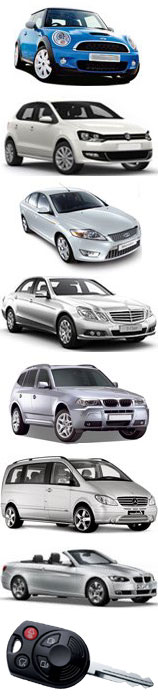
Car rental on OrangeSmile.com
Map of cities


Map of sights


Japan in photo stream


Travel advices for Japan cities

Tokyo

Kyoto
3. Going to restaurants, take into account that in most of them the menu is only in Japanese. However, staff of prestigious establishments is fluent in English, so you can ask any questions. 4. While walking around the city and visiting various excursions travelers should be very quiet. The thing is that the locals don’t like the noise and are very restrained emotionally. The rapid display of emotion or loud speech is considered a sign of mauvais ton. 5. In addition to public transport, … Read more 

Osaka
3. Tourists looking to make intercity and international calls should better use street call boxes. One can easily find them in the streets as they are commonly bright green. The street call boxes accept special phone cards as payment means which can be bought in all day shops, hotels and tourist information centers. 4. The best place to profitable exchange any currency is an airport. Cash machines charge a rather high transaction fees meanwhile banks feature a rather formal procedure which will … Read more

Sapporo
3. The most popular type of public transport in the city of Sapporo is considered to be a tram running to almost all landmark and district of the city. Another way to cruise the city is by underground. However this way of travelling through the city is a bit more expensive. 4. Sparing tourists and those guests planning to travel much by public transport should buy a travel pass for a day or a couple of days being a perfect way to save costs. It should be noted that on weekends and holidays the … Read more

Fukuoka
3. Travelers aren’t recommended to rent a car, since the left-hand traffic is adopted in the city and it can be quite unusual for drivers from other countries. In addition, virtually all traffic signs are written by characters and mayn’t be clear to foreigners. 4. Despite the fact that the crime rate in the city is relatively low, tourists have to observe basic cautionary measures. Don’t take valuables with you and in no case left bags and outerwear unattended. In crowded areas monitor … Read more

Hiroshima
3. Mains voltage is 100 V; electric appliances may need special adapters. Many large hotels provide them on request; adapters can be purchased in any household store. 4. Those who hope to bring a lot of photos from the trip have to remember that a free photo and video isn’t allowed everywhere. On the territory of some of attractions it can be performed only at an additional cost; in some temples making pictures is prohibited. You can shoot locals only with their prior consent. 5. Going … Read more

Kobe
3. The most luxurious and expensive hotels are located on the waterfront. Budget travelers should look for suitable hotels at some distance from the coast. 4. Apart from classic hotels, the so-called "ryokans" are common in the city. Such traditional inns are distinguished by special room equipment. Instead of regular beds, the rooms feature tatami mats. Some ryokans have their own thermal baths. 5. Kobe has a modern airport, but it only accepts domestic flights. The easiest way to get … Read more

Nagasaki
3. The city has a large selection of hotels at various levels. Some of the most attractive hotels with affordable prices are located near the train station. 4. Thrifty tourists should pay attention to restaurants serving traditional Japanese cuisine. Most of them have attractive prices, while hotel restaurants are the most expensive. 5. Active tourists should take a pair of comfortable shoes with them on a trip. Nagasaki, they conduct many exciting excursions to nature reserves and … Read more