



India sightseeing. Travel guide - attractions, sights, nature and touristic places
 India has always attracted numerous tourists from different parts of the world by its wonderful beaches, bright colours of weightless sari and snow that is so unusual for a country with hot climate. India is a country with rich culture and heritage that never ceases to amaze visitors with its uniqueness.
India’s fragrant cuisine is known for its generous use of spices (ginger, chili pepper, and others) and vegetarian dishes. Most of the Indian …
Read further
Read further
In India, people speak more than a hundred languages. Hindi is the most common language, followed by Bengali, Tamil, Urdu, and others. Many Indians …
Read further
Read further
 The city of Mumbai is one more interesting tourist destination. This old city has retained its original look despite numerous modern buildings and skyscrapers. One can still see posh mansions and ancient churches in old quarters of Mumbai. The most famous sights of the modern part are the Fortress and several churches of the 18th century. The most famous sanctuaries of the city are Saint Thomas Church, Saint John’s Church, Mahalakshmi Temple, Haji Ali Mosque and St. Michael's Church. Guests of Mumbai are also recommended to visit the Museum of Western India, Taraporewala Aquarium and Victoria Gardens Park.
In India, tourists will find such a large number of museums, temples, and historical sites that it is impossible to visit everything during one stay …
Read further
Read further
History and Entertainment
On the territory of India, the remains of the oldest settlements on the Earth were found. The territory of the present country was populated even 200 000 years ago. Initially, the territory was populated by nomadic people. The first permanent settlements were formed here 9 000 years ago. In the 5th century BC, the Indian territory consisted of 16 independent kingdoms that were consequently unified in large countries. This was primarily caused by multiple Persian and Greek invasions. The development of new countries was expedited by trade relations with the Roman Empire. In the 7th century, the large state was established and called North India governed by Harsha the Emperor. When he died, noble dynasties had multiple military conflicts for the right to control the country. The early Middle Ages were marked by multiple invasions of Turks, Arabs and Afghans who conquered the significant part of the territory of North India and formed the Delhi Sultanate here.
The cheerful and bustling nightlife in the big cities of India attracts tourists from all over the world to have fun among dazzling lights alongside …
Read further
Read further
 The Portuguese, Danes, Dutchmen and the French fought for the right to possess the territory. The British colonizers did not stay on the sidelines. Exactly Great Britain gained full control over the territory. At the beginning of the 20th century, local residents started establishing liberation movements. The country gained independence from Great Britain in 1947.
1. In India, it is considered a sign of great rudeness to point at someone or something with one finger. If you want to do this, use all the fingers …
Read further
Read further

This article about iconic landmarks and sights of India is protected by the copyright law. You can re-use the content, but only under the condition of placement of an active link to www.orangesmile.com.
Fantastic City Tours and Excursions in India
Reference information
Map of all parks

National and city parks of India
♥ National Park 'Anamudi Shola' . On the map
 Photos

♥ National Park 'Anshi' . On the map
Photos
♥ National Park 'Balphakram' . On the map
Photos
♥ National Park 'Bandhavgarh' . On the map
Photos
♥ National Park 'Bandipur' . On the map
Photos
Map of all castles
Castles of India
♥ Castle 'Anegondi Fort' . On the map
Photos
♥ Castle 'Ankola Fort' . On the map
Photos
♥ Castle 'Bandhavgarh Fort' . On the map
Photos
♥ Castle 'Bangalore Fort' . On the map
Photos
♥ Castle 'Barabati fort' . On the map
Photos
Map of all palaces
Palaces in India
♥ Palace 'Arki Palace Himachal' . On the map
Photos
♥ Palace 'Bangalore Palace' . On the map
Photos
♥ Palace 'Bhutan House' . On the map
Photos
♥ Palace 'Bilara Palace' Rajasthan. On the map
Photos
♥ Palace 'British Residency' Kollam. On the map
Photos
Famous and uniques places in India from our review series
Bijoy Jain Studio
From the series “Extravagant houses and apartments of designers” The studio-home of architect Bijoy Jain is located on the coast in one of the quietest and most remote areas of Mumbai. He decided to build his house surrounded by idyllic natural landscapes. Important national traditions were taken into account in the design and construction of the house. Natural, environmentally friendly materials were used in the construction of the house. The floor is covered with beautiful antique tiles. There are beautiful trees near the house. Their age is more than a hundred years.
 Beautiful antique furniture, vases, and works of art were used in the decoration of the rooms. Their interior is not overloaded with elements. Several comfortable terraces are equipped on the adjacent territory of the house. They are decorated with wooden furniture. There is also a … Read all
Rajmahal Traps
From the series “Volcanoes that changed the face of the Earth” Rajmahal Traps are located in India. They are also of great interest to both researchers and ordinary travelers today. They are found in Eastern India. The area of the magma plateau is about 4,100 square kilometers. A large-scale lava eruption occurred in this area of the planet at the beginning of the Cretaceous period. The Kerguelen hotspot was the epicenter of the eruption. Rajmahal Hill is the most striking reminder of the massive eruption. Its height is 608 meters.
 It is a huge lava formation. It is the largest thickness in the territory of India. It is also one of the largest magma formations on the planet. The thickness of the lava flows did not exceed 70 meters in other areas of the plateau. The beautiful hill is a popular natural attraction today. It is most interesting to … Read all
Dekan Traps
From the series “Volcanoes that changed the face of the Earth” There are many igneous provinces in India. One of the largest igneous provinces is located on the Deccan Plateau. These traps are the second largest in the world by area. They cover an area of about 500,000 square kilometers. The Deccan Traps were formed more than 60 million years ago. The researchers estimate that about 512 cubic kilometers of lava were poured onto the earth's surface during the eruption. Scientists were able to determine the approximate location of the epicenter of the eruption. It is the so-called Reunion hotspot. It is located under the island of Reunion.
 The Deccan Traps are among the most studied on the planet. Scientists believe that an asteroid that fell to earth could trigger a large-scale lava eruption. Earth collided with a huge asteroid in the area of the … Read all
Country maps

Car rental on OrangeSmile.com

Map of cities


Map of regions


Map of sights


Sightseeing in popular cities of India

Jaipur
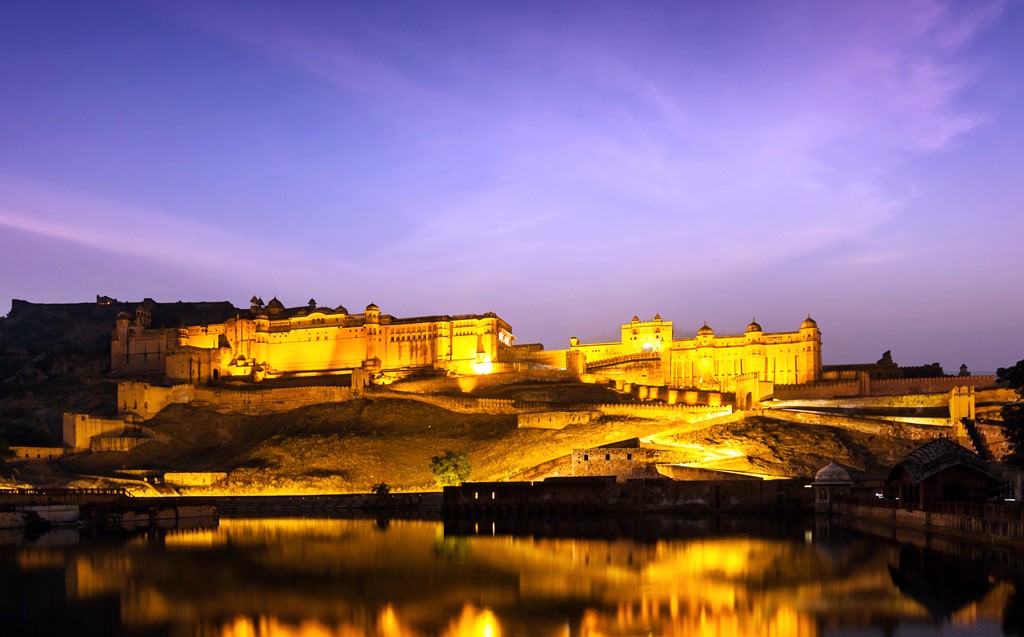
Legendary ruler and warrior Jai Singh II was the founder of the city. He was also a talented astronomer. When his father Maharaja Bishan Singh died, the boy was only 11. Despite such a young age, Jai Singh II had to become a ruler. At that time, Amer was the capital of the region. It was located eleven kilometers away from modern Jaipur. To protect the territory, Jai Singh II built a fort of an impressive size. He named the fort Jaipur. The kingdom of Jai Singh II was getting richer year … Read more 

Kolkata
Settlements existed on the site of modern Kolkata and its surroundings already more than 2,000 years ago. However, Kolkata as a city started actively developing at the end of the seventeenth century when the British East India Company started working in the region. Reportedly, Job Charnock was the founder of the city, but the Calcutta High Court stated in 2003 that the city didn’t have a founder. During the British reign, the city was the capital region of British India. It maintained this … Read more

Ahmedabad
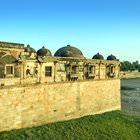
Ahmedabad was officially established in 1411. According to local legends, Sultan of Gujarat Ahmed Shah once saw an unusual rabbit that was chasing a dog. Sultan was amazed to see such a courageous animal and decided to build a city on the site where he saw the rabbit. Ahmedabad was growing quickly and became one of the best cities in India already in the 17th century. It became an important center of trade. Historians mention several periods of prosperity in Ahmedabad, but there were also … Read more

Agra
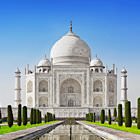
It is not clearly known when the first settlement on the site of modern Agra appeared. The earliest sources date back to the 11th century and mention the assault on the fortress of Agra. Everything changed at the beginning of the 16th century. Sultan Sikandar Lodi conquered the area and made the order to establish a new city, Agra. He made Agra the capital instead of Delhi in 1504. The year 1526 was very important for the city as it became the capital of a giant empire. After that event, … Read more

Amritsar
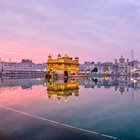
Guru Ram Das, the fourth Sikh guru, bought the village of Tung in 1574. This plot of land was situated near a lake, and so the guru founded a settlement with the same name. Ram Das built his residence in the town in the same year. The construction of the city lasted more than two centuries. Amritsar still has a special city layout called Katras. This is a series of closed quarters that are not easy to enter. The purpose of building the city this way is simple – for invaders, it is much … Read more

Lucknow
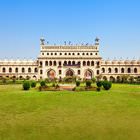
Initially, Lucknow was a part of the Kannauj Kingdom that had Hindu roots. In 1528, Mughal Emperor Babur captured the city. Later, the grandson of the conqueror made the Indian city a part of the subah of Awadh. The city of Faizabad not far from Lucknow became the capital of Awadh, but it was decided to move the capital to Lucknow in 1775. The power of the Mughal Empire was decreasing year after year, but the city’s importance as a political center was only growing. Because of this, it was … Read more

Darjeeling
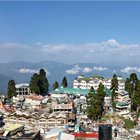
Chogyals (Kings) of the Kingdom of Sikkim controlled the territory of modern Darjeeling until the 80s of the 18th century. Later, the Gurkhas of Nepal tried to conquer the territory. After that, East India Company started controlling Darjeeling, but the region’s border still belonged to the British. It was British officers who discovered an old monastery in a remote area in 1828. They considered the monastery a suitable place to build a sanatorium. The Sikkim’s leader had nothing against … Read more

New Delhi
An important historical site is Lāl Qila, which is also commonly known under the name of "Red Fort". Red sandstone served as the main building material for the erection of this fortification. Over the centuries, the fort has been the country's main governmental residence. Today, it is striking in its impressive scale and the main value - its luxurious interior decoration. New Delhi has the largest mosque in India - the Jama Masjid, it was built in the middle of the 17th century by the … Read more