
 English
 Russian
 Nederlands
 Deutsch
 Español
 Français
 Türkçe


Travelling through Austria - roads, airports, railway, bus transportation
 Austria is one of the most economically stable and prosperous states in Europe. That is why the infrastructure here is set at the highest level. AImost all means of transport are presented in the country; all of them go strictly on time without delays and overlays. The Austrians are fond of cars, but in the pursuit of pure ecology, the trends are gradually changing. The bus and tram is considered the most common public transport both among both locals and tourists. In large cities, there is also a trolleybus. You can travel within a city or region by bus. Special buses carry holidaymakers to ski resorts along dangerous serpentines, where it’s not that simple to drive a car.
Tourists coming to a new country, want not only to relax, but also to get new impressions. This is taken by the owners of the unusual hotels, who are …
Read further
Read further
 Cycling has been very popular in Austria for several years now. Local authorities are promoting the green way of life and protection of the environment, and all Austrians are proud of their clean unpolluted mountain air. There are bike lanes in almost every city. These routes pass through the most picturesque landscapes and historical places. In large cities, you can rent a bicycle; many vacationers do that. More than fifty airports operate in Austria. In general, the air transport is used for the international communication, because the ground transport of the country is developed quite well. You can rent a car in Austria or take a taxi. However, this option is relevant only for wealthy tourists, because gasoline is quite expensive, and many highways are paid. In the tourist season, even the cost of a taxi service is significantly increased.
Main airports and avia transportation
Austria has long been located at the intersection of routes to various European countries. This has led to the fact that the hotel industry is well …
Read further
Read further
Railway, bus, water and other transport
 The transport in Austria is well developed and very effective. The bus is the most popular mean of public transport. All routes are always on time. At each stop, there is an information board with the schedule of routes. Buses serve not only city lines, but long distance too. The state buses, Bundesbus, are very popular. However, the bus service reduces a number of runs on holidays. On Sundays, buses don’t go to some hardly accessible cities and towns. At the same time, on weekdays, so-called postal buses will take passengers to the most remote settlements. Trams operate in several major cities, such as Vienna, Graz, Innsbruck, Linz and others.
Austria is characterized by the temperate continental climate. The humidity in the country is significantly high. The average annual temperature is …
Read further
Read further
 To appreciate the high quality of pavement, you can rent a car. That can be done in any major city and practically at every airport. To do this, you must have an international-class driver license and a credit card. Drivers pay for highways in Austria. A receipt for payment must be kept under the windshield. Gasoline is also quite expensive, so car rental is in demand only for interregional and world travel. In large cities, it is advisable to use public transport or ride bicycles during the day. The second one can also be rented in any city. A large number of bike lanes allow tourists and locals to get to any desired point of the city. Routes, for the most part, are laid through the most picturesque places of cities.
For a long time, Austria belonged to the Catholic states. The influence of Rome was very significant, therefore practically the whole population of …
Read further
Read further

This article about transportation in Austria is protected by the copyright law. You can re-use the content, but only under the condition of placement of an active link to www.orangesmile.com.
Fantastic City Tours and Excursions in Austria
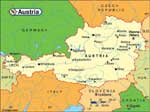
Country maps
Car rental on OrangeSmile.com
Map of cities


Map of sights


Austria in photo stream



Travel advices for Austria cities

Vienna
3. The majority of shops and shopping centers are open until 18:00. Shops located near railway stations work until 23:00. 4. Tobacco products can be purchased in special stores and kiosks only. 5. Leaving tips in local restaurants is customary. The usual size of tips is 5 - 10% of the total bill. Leaving tips in summer cafes and small restaurants is not necessary. You can also leave a monetary reward to taxi drivers and hotel employees, which should be not less than 1.5 Euros. 6. … Read more 

Salzburg
3. Tickets for public transport can be purchased at any tobacco shop - here they are the cheapest. 4. The city’s taxi is quite inexpensive, but rates may rise in the evening. It is better to call to a special service and get a taxi to a restaurant or a hotel as "catching" a free taxi on the road will be quite difficult. 5. Bike remains a very popular vehicle among locals and tourists as by using it you can freely roam around the city. Top Bike is considered the best bike rental … Read more

Innsbruck
3. The majority of stores and shopping malls are open every day except for Sundays. Many stores close for lunch on daytime. 4. It’s normal to leave a tip in the local restaurants and cafes. The average amount of tip is about 5 - 10% of the total bill. It is worth noting that in many bills tips may already be included. In this case leaving a tip to a waiter is not required. 5. In order to save on attending exhibitions and cultural events, you can purchase special "city-card". Besides … Read more

Kitzbuhel
3. To rent a car you have to have an international driver's license and a credit card with the desired amount of deposit on account. Clients under 23 years, as well as those who received the driver’s license under a year ago, may be denied service. 4. Shops are generally open at 8:00 am and work until 6:00 - 7:00 pm. In shopping malls working time may be longer, until 9:00 pm. It's worth noting that alcoholic beverages and tobacco products can only be purchased in specialty stores, … Read more

Graz
3. The most beneficial way to make phone calls is to use public pay phones, which can be found close to all government institutions and shopping centers. They are operated by special plastic cards or coins. The calls by such phones made from 8:00 to 18:00 will be the cheapest. 4. Money can be easily exchanged at any bank or post office. While exchanging your money, do not forget to pay attention not only to the exchange rate, but also to the size of commission charged. Different … Read more

Linz
3. The high tourist season is from May to October. At this time, the most favorable weather prevails. The temperature rarely drops below 20 degrees Celsius, and rains are rare. Travelers who expect to visit Linz at this time are advised to book a room in advance. 4. Public transport in Linz is represented with an extensive network of trams and buses. Tickets have to be bought in advance; they are sold at stands at bus stops and tobacco shops. The cost of a ticket for a single journey is 1.6 … Read more

Bregenz
3. In order to rent a car, tourists will need an international driver’s permit and a credit card. In order to rent an expensive vehicle, rental offices may require several credit cards. The driver’s age must be above 21. Some rental offices have even a stricter rule – the driver must be 23 or older. 4. The majority of shops work from 8 am – 9 am to 6 pm – 7 pm. Some shopping centers serve their visitors until 9 pm. Large shopping centers accept both cash and credit cards. 5. … Read more

Tirol
3. The most profitable way to make calls to other cities and countries remain street payphones. They are installed on every busy street and near important tourist attractions. Phone cards can be purchased in any tobacco shop or post office. 4. Local hotels differ with quite high prices; seasoned travelers recommend paying attention to mid-priced accommodation. Three-star hotels offer guests a wide range of services and are often located in a very attractive area. 5. In addition to numerous … Read more